Home / Digital Carbon Footprint
What Is Digital Carbon Footprint? Everyday Examples and Simple Ways to Measure It
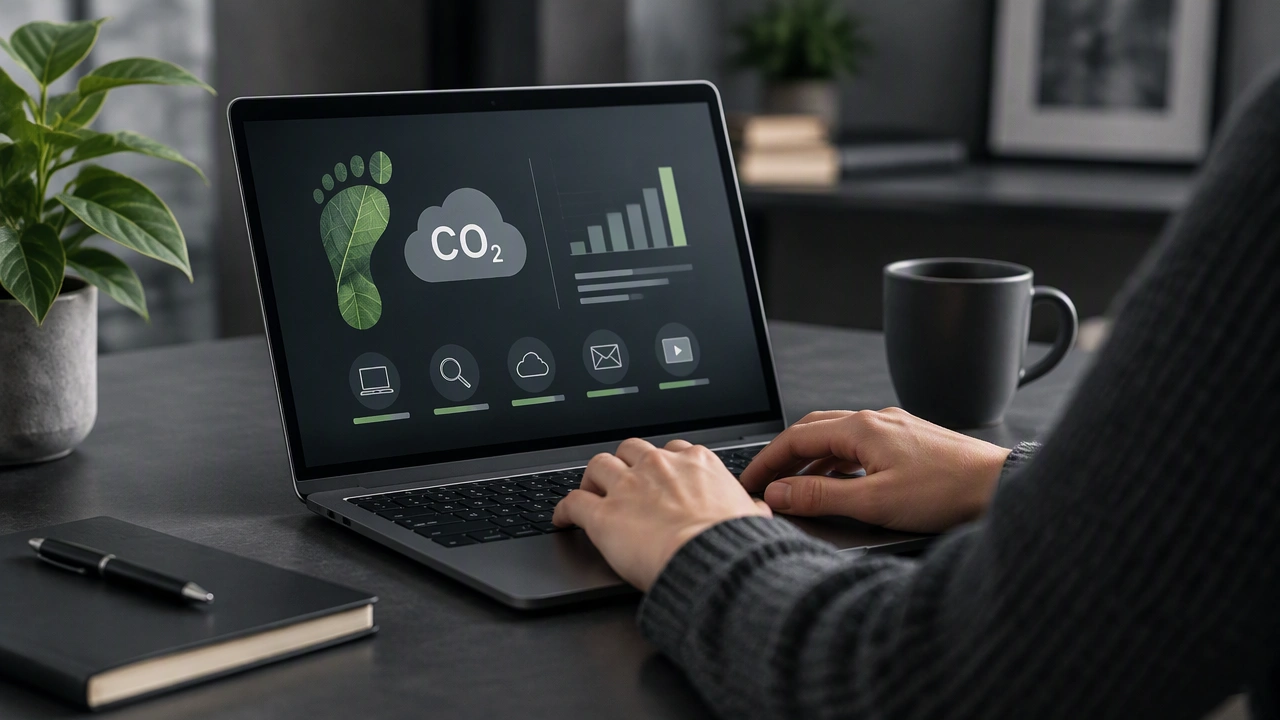
The internet feels invisible, but it runs on electricity. Every search, stream, message, and cloud backup depends on devices, networks, and data centers that consume power. The greener internet starts with understanding that convenience still has an environmental cost, even when no paper or fuel is involved.
What is digital carbon footprint?
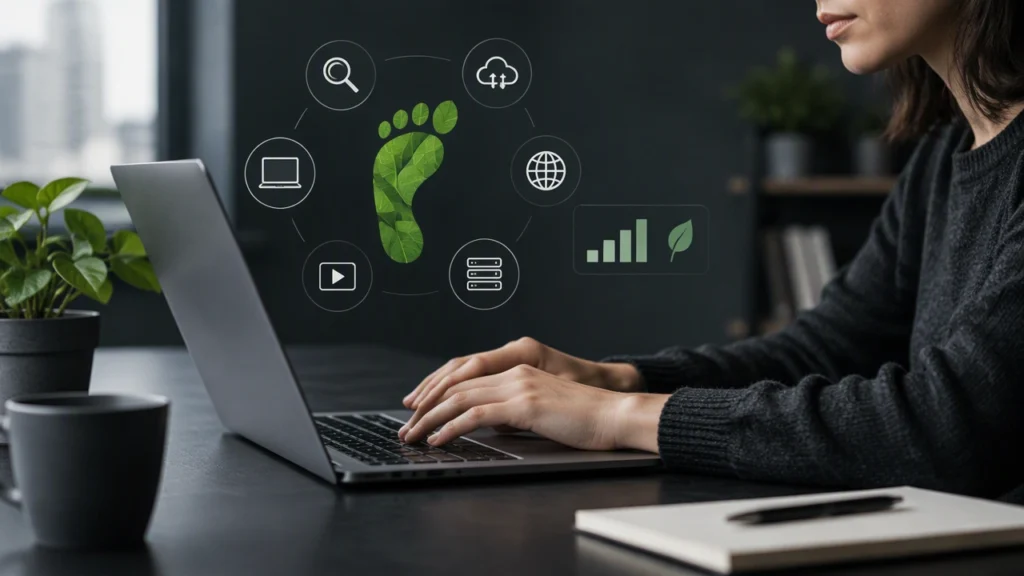
What is digital carbon footprint? It is the greenhouse gas emissions connected to the lifecycle of digital activities: manufacturing devices, powering networks and data centers, and using electricity at home. Emissions are usually expressed in carbon dioxide equivalents, or CO2e, which groups different greenhouse gases into one comparable measure.
The footprint includes two broad parts. The first is embodied impact, created when phones, laptops, routers, and servers are mined, manufactured, transported, and eventually recycled or discarded. The second is operational impact, created when those devices and systems run. Most everyday estimates focus on operational electricity, while a complete picture also considers hardware.
How everyday online activity adds up
A single web search or email is small compared with a long video call, but digital life is made of repeated actions. The exact impact depends on factors such as device efficiency, network type, data center energy, and the carbon intensity of local electricity. That means one number cannot describe every user accurately.
Searching and browsing
Search results load pages, scripts, trackers, and images. Opening several tabs or refreshing a busy site repeatedly uses more energy than a simple page with fewer resources. Search itself is usually modest compared with the full pages people visit afterward.
Streaming and video calls
Video is data intensive. Higher resolutions require more data, longer buffering, and more processing. A short clip on a modern phone may have a small footprint, while hours of high-definition streaming on several devices can become the largest part of a household’s digital use.
Email, cloud storage, and messaging
Sending a message has a small operational cost, but large attachments and long mailing lists increase data transfer. Cloud storage keeps files available across devices, yet the servers storing them run continuously. Old backups, duplicate photos, and unused copies add to that load.
Devices and replacement cycles
Manufacturing a smartphone or laptop requires materials and energy long before it is switched on. Keeping a device longer, repairing it when possible, and choosing refurbished equipment can reduce embodied emissions. Power settings, screen brightness, and unused background apps also affect daily use.
Simple ways to estimate your footprint
Exact measurement requires detailed data about energy use and electricity sources, so a practical approach is to combine a small activity log with a transparent calculator. The goal is not perfect precision; it is to identify where your impact is concentrated.
- List your main activities. Record typical weekly hours for streaming, video calls, browsing, gaming, and social media.
- Note device and connection type. Separate phone use from laptop or desktop use, and note whether you rely on mobile data, fiber, or broadband.
- Check resolution and file sizes. Track whether you stream in standard or high definition, and note large uploads or downloads.
- Use a reputable emissions calculator. Enter your activity estimates and local electricity mix, then review the assumptions the tool exposes.
- Compare periods rather than absolutes. Measure one month, change a habit, and compare the next month using the same method.
Households can also estimate device energy with a plug-in power meter. Measure a laptop while browsing, a router over 24 hours, or a television during a typical evening. Multiply the measured wattage by usage time to create a simple baseline. This method does not capture networks or data centers, but it reveals which devices deserve attention first.
Where measurement becomes uncertain
Digital emissions are difficult to assign to one person. A shared video platform, for example, may use energy on your device, across the network, and inside a data center. The data center may run on renewable electricity at one hour and fossil generation at another. Results can also shift when a service changes servers or when a country’s grid becomes cleaner.
Use ranges instead of false precision. Report an estimate as a rough band, state the assumptions, and update it when your habits change. A useful measurement is one you can repeat.
Practical steps with real effect
Start with the largest sources you find in your estimate. Streaming and device use often matter more than individual searches, but everyone’s pattern is different.
- Stream at a sensible quality. Choose standard definition when high definition adds little value, and download only what you plan to watch.
- Close what you are not using. End idle tabs, stop autoplay, and pause cloud backups during high-demand periods.
- Use efficient networks. Wi-Fi on a modern router is often more efficient than mobile data for heavy tasks, though local conditions vary.
- Extend hardware life. Replace batteries, add storage instead of replacing a device, and recycle electronics through approved channels.
- Tune your settings. Lower screen brightness, enable power saving, and remove unused apps that run background processes.
- Send smaller files. Compress images, share links instead of attachments, and clean duplicate cloud copies.
Organizations can apply the same logic at a larger scale. Teams can measure the energy of key services, retire unused infrastructure, choose efficient video settings, and set clear data retention rules. Better defaults often reduce more emissions than asking every individual to remember a checklist.
A calmer way to think about digital impact
A digital carbon footprint is not a reason to abandon technology. It is a way to make hidden costs visible. Measurement turns vague concern into a short list of choices: use the right resolution, keep devices longer, remove digital clutter, and support services that publish credible energy information.
Begin with one week of data, calculate a simple baseline, and choose a single change you can sustain. Small adjustments repeated across millions of users can reduce electricity demand while making online experiences faster and less cluttered. That is the practical meaning of a lighter footprint for search and the internet: fewer wasted resources, better habits, and clearer decisions.