Are Data Centers Bad for the Environment? Location, Efficiency and Energy Decide
Data centers have become the hidden engines of everyday life. Every search, stream, video call and cloud backup depends on servers, storage and networking equipment running around the clock. That makes the question are data centers bad for the environment more than a technical debate. It is a question about electricity, water, land and the choices that shape a greener internet.
The honest answer is that data centers can have a significant footprint, but their impact varies widely. Two facilities of the same size can produce very different emissions because of where they are built, how efficiently they operate and what energy they use.
Why data centers use resources
A data center consumes electricity for three main purposes: computing, cooling and power conversion. Servers and storage devices do the work, while cooling systems keep temperatures within safe limits. Uninterruptible power supplies and transformers also lose a small amount of energy as heat.
Water is another important factor. Many facilities use evaporative cooling, which releases water vapor to remove heat efficiently. In dry regions, that water may come from stressed rivers or aquifers. Other designs use air cooling or closed-loop systems that reduce water use but may require more electricity.
Hardware manufacturing also matters. Chips, batteries, cables and servers require minerals, factories and long supply chains. Extending the useful life of equipment can lower the need for new production, while frequent upgrades can increase embodied impacts even when a facility runs efficiently.
Location changes the equation
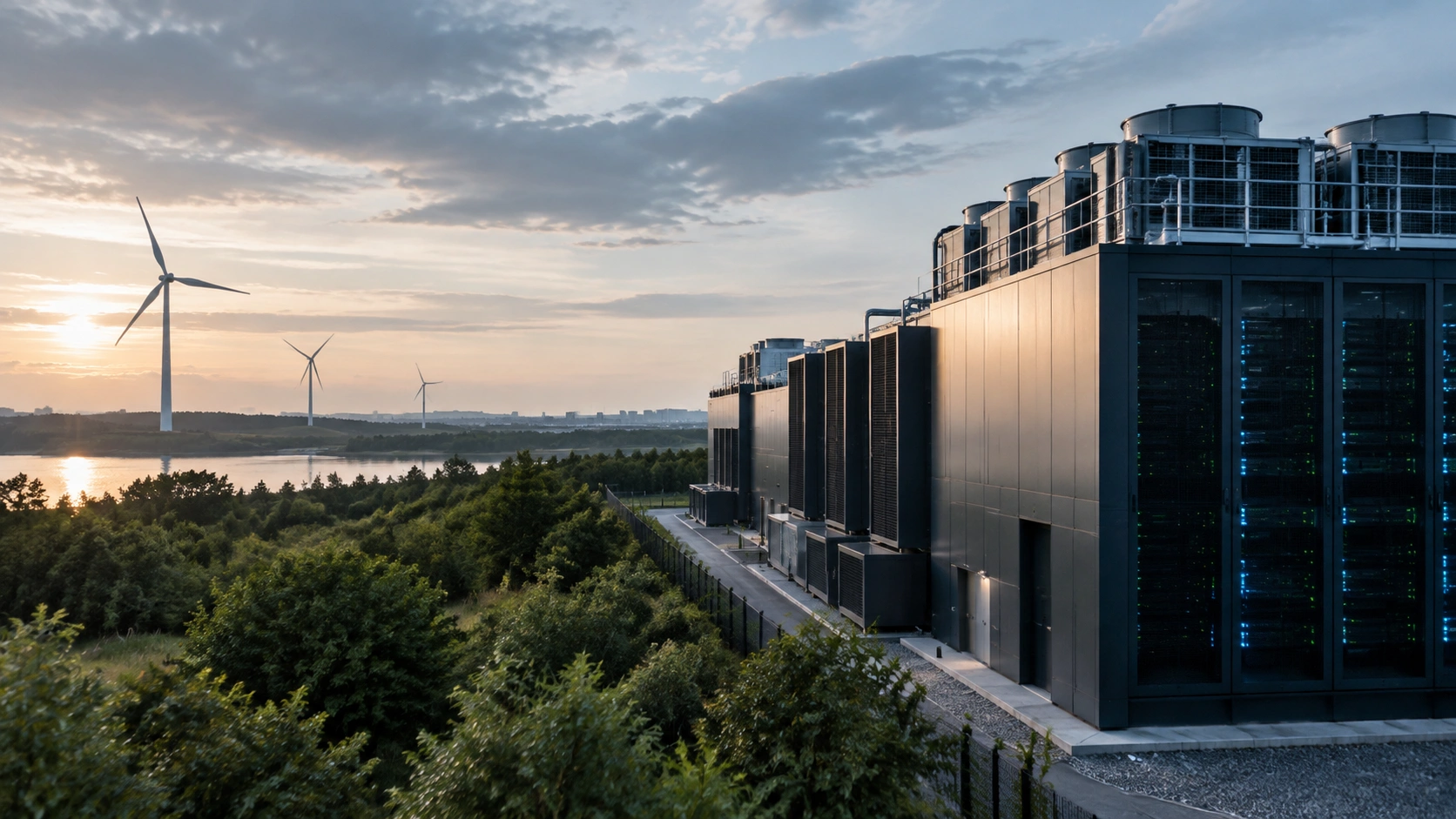
Geography affects both energy and water. A data center in a cool climate can reject heat with less mechanical cooling, lowering electricity demand. A facility near abundant low-carbon electricity can serve the same workload with fewer emissions than one powered by coal or gas.
Local grids change over the course of a day. Solar output peaks at midday, while wind may be strongest at night. Data centers that can shift flexible workloads toward cleaner hours can reduce emissions without moving a single server. This approach, often called carbon-aware computing, works best for tasks that can be delayed, such as batch analytics, model training or large backups.
Water availability is equally local. A cooling strategy that is sensible in a cool, wet climate may be inappropriate in a desert. Good planning compares electricity use, water use and grid emissions together rather than optimizing one metric in isolation.
Efficiency is measured, not assumed
The industry uses power usage effectiveness, or PUE, to describe how much total energy a facility uses compared with the energy delivered to computing equipment. A PUE of 1.5 means that for every kilowatt reaching the servers, another half kilowatt supports cooling and other overhead. Lower values generally indicate less waste, though the metric does not capture everything.
Several design choices improve efficiency:
- Cooling design: Hot-aisle containment, higher supply temperatures and free cooling reduce the work required by chillers.
- Server utilization: Well-packed machines do more work per watt than underused servers running at low load.
- Power conversion: Modern uninterruptible power supplies and variable-speed fans reduce losses.
- Water management: Hybrid systems can switch between water and air cooling based on weather, cost and emissions.
- Maintenance: Clean filters, calibrated sensors and timely repairs prevent efficiency from drifting downward.
Efficiency also depends on workload design. Software teams can reduce energy use by compressing data, caching frequent requests, choosing efficient models and avoiding unnecessary computation. Small changes add up when services operate at global scale.
Energy source is the largest lever
Even the most efficient building can have high emissions if its electricity comes from fossil fuels. Conversely, a moderately efficient facility powered by additional renewable generation may have a much lower operational footprint.
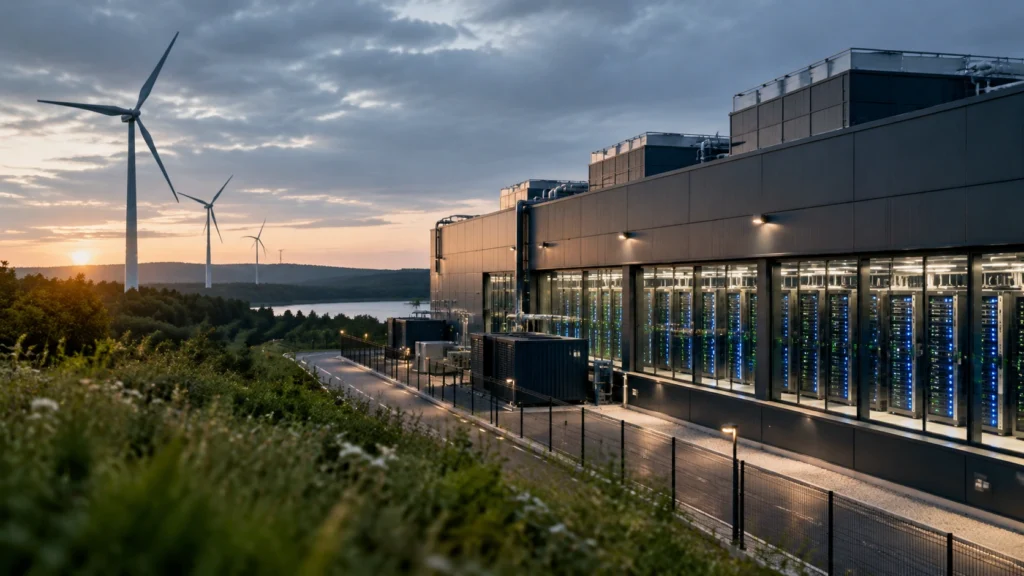
Companies often describe their electricity as renewable through two broad approaches. On-site generation, such as solar panels or batteries, directly supplies the facility. Off-site arrangements include long-term power purchase agreements, which finance new wind or solar projects, and market-based instruments that match consumption with clean electricity claims.
Matching matters at the right time and place. Annual totals can hide emissions that occur when the local grid is dirty or when demand peaks after sunset. Procurement that reflects hourly patterns, or investments that strengthen the local grid, can deliver clearer climate benefits.
What about water, land and communities?
Environmental impact is not limited to carbon. Large campuses require land, roads and transmission infrastructure. Construction can affect habitats and traffic. Noise from cooling equipment may concern nearby residents.
Water use deserves transparent reporting. Some facilities publish annual withdrawals and consumption, while others provide only regional estimates. Communities can ask where water comes from, how much is consumed, and what happens during droughts. Operators can respond with air-cooled designs, recycled water or seasonal limits on evaporative cooling.
Heat recovery is an emerging opportunity. Data centers produce steady low-grade heat that can warm buildings, greenhouses or district heating networks. When that heat displaces a gas boiler, the environmental benefit extends beyond the facility itself.
A practical way to judge impact
To assess a data center, look beyond a single headline number. A useful review considers:
- Location: What is the local grid mix, climate and water stress?
- Efficiency: What is the reported PUE, and how consistently is it achieved?
- Energy: Is clean electricity additional, hourly matched or only annually averaged?
- Water: Is consumption disclosed, and how does it change in dry months?
- Hardware: Are servers repaired, reused and recycled responsibly?
- Transparency: Are methods, boundaries and progress targets published clearly?
No facility will score perfectly on every measure. The goal is to identify trade-offs and favor improvements that reduce total harm rather than shifting it from one resource to another.
The path to a lighter footprint
Data centers are not inherently good or bad for the environment. Their impact depends on decisions made before construction and throughout operations. Cooler locations, high utilization, efficient cooling, longer hardware life and clean electricity can dramatically reduce emissions. Thoughtful water use, heat reuse and community engagement protect the wider environment.
For users, the practical takeaway is simple: digital activity has a physical foundation, but it does not have to grow in step with emissions. Services can become more efficient, grids can become cleaner and infrastructure can be sited with care. Progress will come from measurable operations, credible reporting and steady investment in the systems that make the internet lighter.